
11 Oct 2025
Microplastics research findings welcomed by Seafish
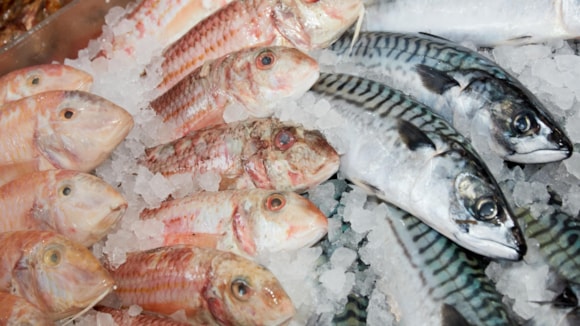
Scientific paper proves seafood has unmerited reputation for plastics consumption
Seafish, the public body that supports the UK seafood industry, has welcomed the publication of new scientific research which concludes that levels of microplastics in seafood have been overstated.
For some time there has been a widespread assumption that seafood contains higher levels of microplastics compared to other foods.
However, a new paper, created following a study led by Professor Ted Henry from Heriot-Watt University’s School of Energy, Geoscience, Infrastructure and Society, and published recently in scientific journal Environmental Science & Technology Letters, provides evidence that challenges that belief and helps put the issue into perspective.
The paper, which analyses how levels of plastic in food is studied and reported, finds that more than 70 per cent of scientific and media coverage on microplastics in food has focused on seafood.
It also shows levels of seafood may contribute 1-10 microplastic particles per day - consistent with other foods including chicken. Ingestion from bottled water is estimated at 10-100 particles per day and exposure from indoor air accounts for 100-1000 particles per day.
Fiona Wright, Head of Regulatory Affairs at Seafish said: “Seafood is a healthy and nutritious choice for mealtimes and plays an important role in a balanced diet.
“As the public body that supports the UK seafood sector, Seafish welcomes rigorous, evidence-based research that strengthens consumer confidence in seafood and ensures accurate public understanding of the science.
“We will continue to work with scientists, regulators and industry to ensure that consumers have access to clear, reliable information about the safety and benefits of eating seafood.”
The research into microplastic levels in seafood started following a 2022 symposium organised by Seafish, National Fisheries Institute (US) and Development Corporation (Australia), with support from Heriot-Watt University.
The symposium brought together a team of global researchers to discuss microplastics in seafood and its effects on human health.
Professor Henry said: “Over attention on the contamination of seafoods by plastic particles in scientific media communications is unjustified and have led to biased perceptions of health risks and loss of the beneficial health effects of seafood consumption.
“Evidence indicates that levels of plastic particles in seafoods are consistent with those of other foods and beverages, and that human exposure to these particles is higher by indoor air and dust than by ingestion of foods and beverages.”
For further information and to read the report, please visit Examining Misconceptions about Plastic-Particle Exposure from Ingestion of Seafood and Risk to Human Health | Environmental Science & Technology Letters
ENDS
Contact Information
Scott Inglis
PR and Communications Manager
Seafish
scott.inglis@seafish.co.uk
Notes to editors
Press office contact: scott.inglis@seafish.co.uk and jane.smernicki@seafish.co.uk
NOTES TO EDITORS
About Seafish
Seafish is here to give the UK seafood sector the support it needs to thrive.
We’re a non-departmental public body (NDPB) set up by the Fisheries Act 1981. Our sponsors are the Department for Environment, Food and Rural Affairs (Defra) and the Scottish, Welsh and Northern Irish devolved administrations.
Using our unique, non-competitive position, we work in partnership with businesses, Government and organisations to overcome challenges and seize opportunities.
Funded by a levy on the first sale of seafood in the UK, our work makes a huge difference. It keeps fishermen safe, supports sustainable sourcing, helps businesses work efficiently, and boosts the nation’s health. We tackle everything from research to campaigns, insights to training – whatever we can do to give our industry the support it needs.
Visit our website www.seafish.org or follow us on Twitter, LinkedIn and YouTube.
Downloads

Powered by Onclusive PR Manager © 2026