
05 Nov 2025
Welsh fishing and aquaculture sectors encouraged to share carbon emissions data
New baseline research will support the seafood industry stay on-track to reach net-zero targets
Fishing vessel owners and aquaculture operators across Wales are being asked to contribute data to a new study aimed at supporting the seafood industry’s transition to net-zero.
The fishing and aquaculture sectors have an important role in contributing to meet Welsh Government net-zero targets by 2050, but currently there are no baseline carbon emissions data available for those sectors in Wales.
Seafish, the public body that supports the UK seafood industry, has been commissioned by the Fisheries Division of the Welsh Government to produce the first ever baseline carbon footprint for commercial Welsh fisheries, covering emissions up to the point of landing and aquaculture production up to the first point of sale.
The study will focus on wild-capture species of economic importance to the Welsh fleet, including European seabass, cockle, edible brown crab, European lobster, king and queen scallops, common whelk, skate and rays.
Data on aquaculture species, including mussels and oysters, is also being collected.
Samira Anand, Welsh Industry Engagement Manager at Seafish said: “We know that Welsh fishers are already taking steps to fish efficiently and responsibly.
“This project is about capturing that progress and providing the baseline to help support the sector’s transition to net-zero.
“The more input we get from industry, the stronger and more useful the results will be, so I would really encourage industry members to engage with this project.”
Seafish needs input directly from the commercial catching and aquaculture sectors so is asking skippers, vessel owners and aquaculture operators to share information to help shape the work.
Contributions, including information on gear lifespan, fuel use and examples of carbon saving measures already in use will ensure that estimates reflect the operating environment of the Welsh fleet.
The work will support delivery of the climate change objective included in the Fisheries Act 2020 which established a plan for the UK and devolved administrations to manage fisheries, aquaculture and marine conservation.
By establishing the carbon footprint of Welsh fisheries the Welsh Government will be better placed to ensure that adverse effects of fishing and aquaculture are minimised.
For more information on how and where you can participate, please contact jesse.drake@seafish.co.uk
ENDS
Contact Information
Scott Inglis
PR and Communications Manager
Seafish
scott.inglis@seafish.co.uk
Notes to editors
NOTES TO EDITORS
A Welsh language translated version of this press release is attached.
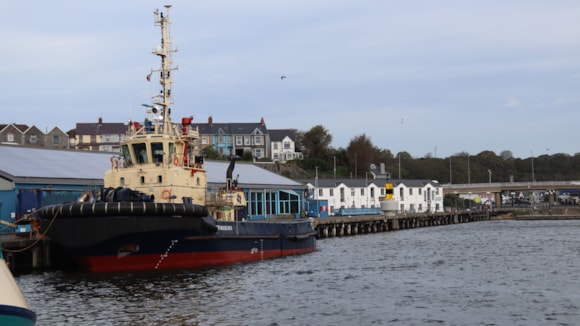
Also attached is an image of Milford Haven for free use to accompany the article.
Press office contact: scott.inglis@seafish.co.uk
About Seafish
Seafish is here to give the UK seafood sector the support it needs to thrive.
We’re a non-departmental public body (NDPB) set up by the Fisheries Act 1981. Our sponsors are the Department for Environment, Food and Rural Affairs (Defra) and the Scottish, Welsh and Northern Irish devolved administrations.
Using our unique, non-competitive position, we work in partnership with businesses, Government and organisations to overcome challenges and seize opportunities.
Funded by a levy on the first sale of seafood in the UK, our work makes a huge difference. It keeps fishermen safe, supports sustainable sourcing, helps businesses work efficiently, and boosts the nation’s health. We tackle everything from research to campaigns, insights to training – whatever we can do to give our industry the support it needs.
Visit our website www.seafish.org or follow us on Twitter, LinkedIn and YouTube.


Powered by Onclusive PR Manager © 2026